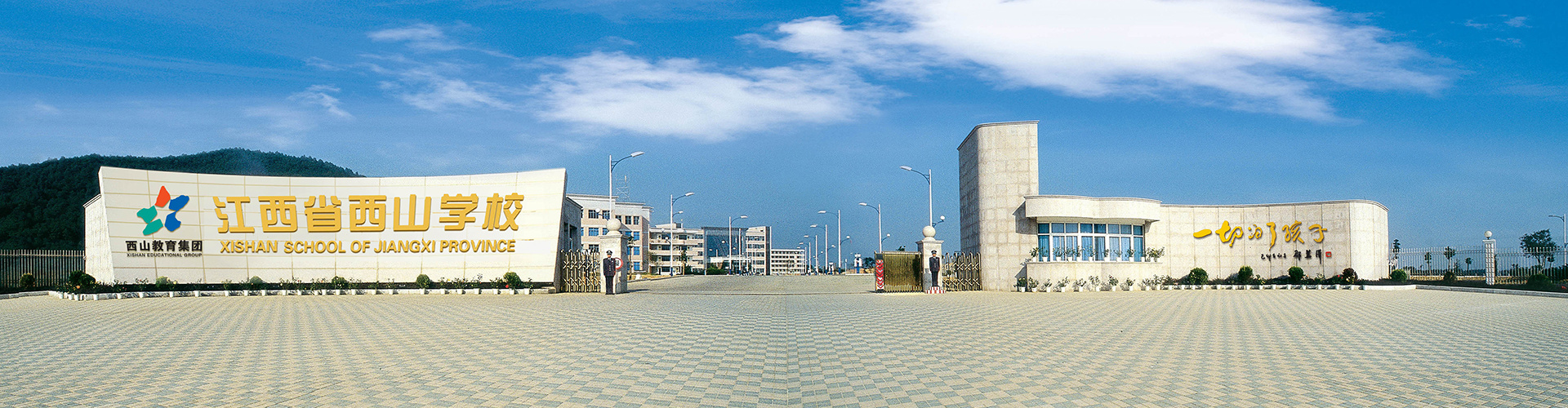
Welcome to jiangxi province xishan school website!
Consulting | Route | Contact 中文版 | English

Home
About
School profile
Educational goals
Honor
School history
Teaching
Management team
Teaching team
The curriculum
Club activities
Characteristic
The sports club
Martial arts
Dragon
Football features
Artistic features
Moral education
Division
The kindergarten
Jiada primary
Middle school
A third
Alumni salon
Xishan students
Celebrated dictum
Admissions
Enrollment Guide
To route
Starting School
Campus facilities
Contact
Join us
Contact us
VR
Learning methods
College entrance examination
Education to explore
Education method
Download
Take care of children, focus on the independence and autonomy of the church
Many parents have this kind of confusion: obviously they have worked hard and spent time and energy to manage their children, but the children are always lazy, so parents fall into the vicious circle of "the more you manage, the more lazy your children".
2019
06-13
【Exploration in Education】Three Stages of Human Education: "Goodness, Truth and Beauty"
From the perspective of the long history, the core values of human survival and development are mainly three types: "truth, goodness and beauty": ancient human education is an education system centered on "goodness", China's first educational thinker Confucius Established an education system centered on "benevolence" and formed a Confucian educational tradition. This educational tradition pays special attention to the cultivation of the moral personality of "benevolence, righteousness, propriety, wisdom and trustworthiness", which has dominated China for more than two thousand years. The "morality-based" education system cultivates people with "morality, intelligence, physique, beauty, and labor" to develop in an all-round way. Although many elements of Western education are absorbed, its core values and overall
06-11
【Exploration in Education】Family education and school education should be effectively combined
With the popularization and rapid and effective development of modern family education, every family gradually pays more and more attention to children's education. When it comes to children's education, every parent will have a lot of experience and uniqueness. Because children have different personalities and growth experiences, and their education methods are also different, children's personalities and development will also be different. However, our purpose is the same, and we all hope that our children will become useful and promising people in the future. Today, every family and every child is a "loved little bird". As parents, we all hope that this little bird can fly freely, fly higher and farther.
06-05
The difference between "praise" and "encouragement" has such a big impact on children
Carol Dweck, a prominent developmental psychologist at Stanford University, and her team have spent the past 10 years studying the effects of praise on children.
Children need to be "seen", not "complimented"!
Research has found that "complimenting" a child isn't always beneficial. Some researchers asked different children to solve math problems. After solving a set of simple problems, the researchers gave each person a sentence of feedback. Some children were complimented on their intelligence: "Wow, you're so smart!" and others were confident about their efforts: "You worked so hard." The researchers then gave the children a more difficult set of questions. .
06-01
[Education Research] The problems of Chinese children are basically the problems of parents!
When raising children, principles and rules are very important, but now most Chinese children are raised as pets without rules. Yu Minhong, chairman of New Oriental Education Technology Group, talked about family education, expounding his new proposition on how to "give children global competitiveness".
05-29
How to develop your child's self-esteem
Self-esteem refers to a person's sense of self-worth or self-image, and is an individual's overall evaluation of oneself. People with high self-esteem have a good sense of self-worth and a positive self-image, and people with low self-esteem have a low sense of self-worth and a negative self-image. Self-esteem plays an important role in children's growth and is the inner driving force for children's self-improvement. A child with high self-esteem is full of confidence in his own ability and value, can face learning and life positively and optimistically, and experience the joy of success more. On the contrary, a child with low self-esteem always tends to deny his own ability and value, lacks positive motivation, and is prone to emotional experience of inferiority, helplessness and anxiety, which brings many negative effects on physical and mental development.
05-23
[Education Exploration] Cui Yongyuan talks about education, every excellent parent will like it
What is education? As a father I am worried about what is education? Education establishes our personality, locks our vision, and shapes our thinking. Education is not just a way of our imagination. In fact, a complete education is divided into social education, family education, school education, and self-education. So like a speech, listening to everyone's reaction, he is also a kind of education, a speech in the White House is a kind of education, and a speech in an auditorium whose name is still unknown is also an education. "This generation has passed, it's almost dusk, and now it's a new generation, what we are most worried about is what kind of education we should give them, and what kind of education we should give them.
05-22
Do you understand "experiential learning"? How to make children experiential learning in life?
B. Joseph Pine, a professor at the Massachusetts Institute of Technology, pointed out in his book "Experience Economy": We can learn 10% of the information we read; we can learn 15% of the information we hear. ; but we can learn 80 percent of what we have experienced. It can be seen the importance of "experience" in the individual learning process. Experiential Learning Theory Experiential learning comes from English "Experientiallearning", also known as experiential learning, discovery reflective learning, activity learning or interactive learning. With the advent of the experiential learning theory of Professor Kolb of Harvard University, experiential learning has been
05-16
[Educational Research] How to love children?
About the educator Kozak, I realized it later, because of this book "How to Love Children", I know that he is an educator, writer and social activist on the same level as Chopin and Marie Curie in Poland. His works and Ideas have become the ideological basis of the UN Convention on the Rights of the Child. In 1978, to commemorate his centenary, the United Nations declared that year the "International Year of the Child". 2012 is the 70th anniversary of Kozak's death, and Poland specially designated the year as the "Year of Kozak". An important contribution of treating Kozak as children is the discovery of the needs and rights of childhood. "Discovering Children" is the loudest in the history of modern education
05-15